
WHEN HISBAH BEGINS TO REGULATE SOCIETY: SOKOTO, RELIGIOUS FREEDOM AND THE CONSTITUTIONAL TEST OF NIGERIA’S DEMOCRACY.
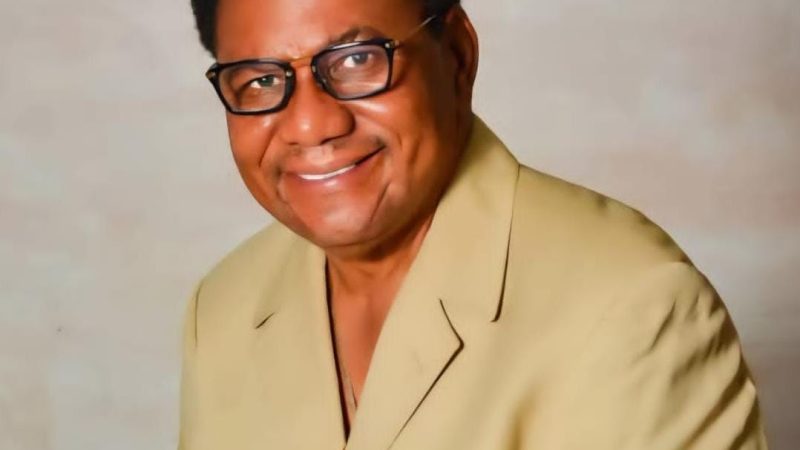
By Cliff Stanley,
Political Scientist,
Public theologian.
“All speculative opinions and religious worship… have a clear title to universal toleration which the magistrate ought not to entrench on”
John Locke (1667)
A ban on mixed-gender gatherings may appear to be a matter of morality. But when religious directives begin to determine how citizens assemble, worship and live, Nigeria must ask a more fundamental question: Who makes the law the Constitution or religious enforcement agencies?
Nigeria’s latest controversy over the Sokoto State Hisbah Board should not be dismissed as another northern religious controversy. It raises a much larger constitutional question about the nature of the Nigerian state, the limits of religious enforcement, the rights of minorities and the future of constitutional democracy.
The Sokoto State Hisbah Board recently announced restrictions on a number of social practices, including mixed-gender gatherings, DJs and certain marriage customs. The board said the measures were designed to strengthen public morality and protect Islamic religious and cultural values.
The immediate question, however, is not whether Muslims should be permitted to live according to their faith. They absolutely should. The question is whether a religious enforcement institution can convert its interpretation of religious morality into a compulsory public rule for everyone without passing through the constitutional machinery of lawmaking.
That is where the matter becomes profoundly Nigerian.
Section 38(1) of the 1999 Constitution is remarkably clear. It guarantees every person freedom of thought, conscience and religion, including the freedom to manifest and propagate religion “in worship, teaching, practice and observance,” both publicly and privately.
Section 10 adds another important constitutional safeguard: neither the Federal Government nor a State Government may adopt any religion as a State religion.
This creates a delicate constitutional balance.
Nigeria is not an anti-religious state. It is a deeply religious society. Muslims have the constitutional right to practise Islam. Christians have the constitutional right to practise Christianity. Traditional religious believers likewise have rights of conscience.
But the government is not constitutionally authorised to transform one religious tradition into the compulsory religious identity of all citizens.
This distinction is fundamental.
A Muslim in Sokoto does not lose his constitutional rights because he is a Muslim. A Christian in Sokoto does not lose his constitutional rights because he is a minority. Citizenship does not become weaker when religious demographics change.
That is precisely what constitutionalism is supposed to prevent.
There is another question that deserves much greater public attention.
If a directive is merely an administrative or religious advisory, its legal status is one thing. If it carries coercive consequences for citizens, however, another question immediately arises: what is the statutory authority behind it?
Section 4 of the Constitution vests legislative powers in the National Assembly at the federal level and in State Houses of Assembly within their constitutionally defined competence. Section 4(7) specifically provides that the legislative powers of a State are vested in its House of Assembly.
Section 100 further establishes the constitutional process through which a bill passed by a State House of Assembly becomes law, including presentation to the Governor for assent.
Therefore, the constitutional architecture is clear: a government agency does not become a legislature merely because it has enforcement responsibilities.
Hisbah may have functions created by state law. It may advise, educate, mediate or enforce particular provisions within its lawful mandate. But where a directive creates a new criminal prohibition, imposes a penalty, or substantially restricts a constitutionally protected liberty, the obvious question is whether that power has actually been conferred by valid legislation.
That question should not be answered by politicians, pastors, imams or social-media commentators.
It should be answered by the Constitution and, ultimately, by the courts.
This is where the debate becomes personal.
Imagine a Christian family living and working in Sokoto: father, mother and children. They attend church together. They sit together during worship. They participate in family programmes, Christian conferences, children’s activities and church fellowship.
Would a general prohibition on mixed-gender gatherings automatically make such Christian worship illegal?
Not on the evidence currently available.
The reporting presently describes a prohibition on mixed-gender entertainment gatherings and other social practices; it does not establish that the Sokoto Hisbah Board has expressly outlawed Christians sitting together in church worship.
But the constitutional concern remains because the language and enforcement of broad morality regulations can have consequences beyond their original target.
A law or directive intended to regulate Muslim social conduct can become constitutionally problematic if it is interpreted or enforced in a way that prevents Christians from exercising their own religious practices.
This is why precision matters.
We must neither exaggerate the Sokoto announcement into something it has not been proven to be nor minimise the constitutional danger of expanding religious enforcement beyond lawful boundaries.
The deeper danger is institutional.
Democracy depends on a separation between religious conviction and coercive state power.
When citizens voluntarily follow religious teachings, that is religious liberty.
When the state compels citizens to follow a religious rule through police power, arrest, punishment or administrative coercion, it becomes a question of constitutional governance.
That distinction is particularly important in a country as religiously diverse as Nigeria.
Today, one religious community may welcome government enforcement of its moral code because it represents the majority in a particular state. Tomorrow, political circumstances can change. The same machinery of coercion can be used by another government against another community.
The constitutional principle must therefore be bigger than today’s political majority.
Religious freedom means protecting the right to practise religion, not giving the state unlimited power to impose religion.
Nigeria has seen this movie before.
The modern political expansion of Sharia-based state legislation began dramatically with Zamfara after the restoration of civilian rule in 1999.
On 27 October 1999, Zamfara Governor Ahmad Sani Yarima introduced the state’s Sharia Establishment Law. The Sharia Penal Code subsequently came into force on 27 January 2000.
Zamfara therefore became the first state of the Fourth Republic to undertake this expansive experiment.
The development generated intense national debate because it was no longer simply a matter of Muslims voluntarily applying Islamic principles to their private lives. It involved the institutionalisation of Sharia-based criminal and social regulation within a state governed by Nigeria’s federal Constitution.
The development subsequently influenced political debates across other northern states.
It is important, however, not to rewrite history simplistically. Sharia itself was not invented in 1999. Islamic law had deep historical roots in northern Nigeria, particularly in the Sokoto Caliphate and pre-colonial Islamic political institutions. What changed in 1999 was the re-entry of Sharia into the formal legislative and political architecture of states under the Fourth Republic.
That distinction is crucial for serious scholarship.
The experience of Sharia implementation also brought the institution of Hisbah into public prominence.
Historically, hisbah refers broadly to the Islamic principle of promoting good and preventing wrongdoing. But modern Nigerian Hisbah organisations operate within a contemporary constitutional state and therefore raise an institutional question: where does religious obligation end and state coercion begin?
Research into the implementation of Sharia in northern Nigeria has documented different models and different institutional arrangements across states. Interestingly, historical documentation indicates that in Sokoto, the committee advising the government on Sharia implementation did not initially recommend establishing an official Hisbah organisation; nevertheless, individuals and groups later performed Hisbah-type functions.
That history is important because it demonstrates that Hisbah is not a constitutional fourth arm of government.
Nigeria has three recognised constitutional branches of governmental power:
legislative, executive and judicial.
There is no constitutional “religious enforcement arm” with authority independent of legislation.
It would be irresponsible to claim without evidence that the Sokoto Government has a secret plan to impose full Sharia on Christians.
There is presently insufficient evidence to make that claim.
But political science requires us to examine institutional trajectories, not merely declared intentions.
The present restrictions can potentially serve several objectives:
First, moral regulation.
The government and Hisbah may genuinely believe that certain social practices undermine Islamic morality and social order. The Sokoto announcement explicitly framed the restrictions in terms of Islamic principles, morality and cultural heritage.
Second, political signalling.
Religious regulation can communicate to a predominantly Muslim electorate that government is defending religious identity and traditional values.
Third, institutional expansion.
Whenever an enforcement institution receives increasingly broad responsibilities, its practical authority can expand beyond the narrow legal purpose for which it was originally established.
Fourth, social engineering.
Rules concerning gender interaction, entertainment, dress, marriage and public behaviour can gradually reshape the public sphere according to a particular moral framework.
None of these possibilities necessarily proves bad faith.
But democratic institutions must examine consequences as seriously as intentions.
For Christians living in Sokoto, the issue is therefore bigger than whether men and women can attend the same social gathering.
It is about whether they remain equal citizens.
Bishop Matthew Hassan Kukah has previously described the situation in Sokoto not simply in terms of persecution but in terms of restrictions on freedom. In a 2025 interview, he said: “we do not have a problem with persecution” but observed that Christians experience “restrictions on our freedom.”
A survey published by The Kukah Centre has also documented concerns reported by Christian respondents in Sokoto, including difficulties surrounding Christian fellowships, threats connected to house prayer meetings and difficulties acquiring land for church construction. These are reported perceptions and experiences from respondents, not proof that every restriction is state policy.
This is why the latest Hisbah controversy deserves sober attention.
If citizens begin to believe that their constitutional rights depend upon the goodwill of the religious majority, then constitutional citizenship has already been weakened psychologicallyeven before a court declares a law unconstitutional.
The greatest danger may not be the immediate ban itself.
It may be the normalisation of parallel authority.
A constitutional democracy cannot function properly if citizens begin to ask:
“Is this permitted by the Constitution?”
and the practical answer becomes:
“Ask Hisbah.”
That would be a profound institutional reversal.
The proper question should be:
What law authorises this restriction?
Then:
Is that law consistent with the Constitution?
Then:
Does the restriction apply only to Muslims voluntarily subject to the relevant religious legal framework, or does it purport to regulate Christians and other citizens?
And finally:
What judicial remedy exists for anyone whose fundamental rights are violated?
These questions are not anti-Islamic.
They are constitutional.
There is also a theological misunderstanding that must be confronted.
To insist that the Nigerian state should not impose one religion on its citizens is not to argue that religion should disappear from public life.
Nigeria is a deeply religious country.
Christians should be able to speak about God in public.
Muslims should be able to speak about Allah in public.
Traditional religious communities should be able to preserve their traditions.
But the state must remain sufficiently neutral to protect the religious freedom of everyone.
That is not secularism as hostility toward religion.
It is constitutional pluralism.
The Christian public theologian should therefore defend the religious freedom of Muslims with the same moral seriousness with which he defends the religious freedom of Christians.
Jesus’ teaching does not require the Church to seize the coercive machinery of government.
Christian public theology should instead insist that government exists for justice, human dignity and the common good.
As Micah 6:8 puts it:
“He has shown you, O mortal, what is good.”
The biblical vision of public authority is not simply about controlling behaviour. It is about doing justice, loving mercy and walking humbly with God.
The lesson of the Zamfara experiment is not that Sharia automatically destroys democracy.
Nor is the lesson that every northern Muslim is secretly seeking to impose Islam on every Nigerian.
Both propositions are intellectually irresponsible.
The lesson is more subtle.
Religious law becomes politically consequential when it moves from voluntary religious observance into coercive state authority.
Once that transition occurs, questions of jurisdiction, equality, minority rights, due process and constitutional supremacy become unavoidable.
That is precisely why the Sokoto development deserves national attention.
Nigeria cannot build a stable democracy by pretending these questions do not exist.
This is perhaps the most important question Nigerians should ask.
If Sokoto wants to regulate public conduct through enforceable law, let the State House of Assembly debate the matter openly.
Let legislators introduce a bill.
Let citizens and civil-society organisations make submissions.
Let Christian and Muslim leaders present their positions.
Let constitutional lawyers examine the proposal.
Let the Governor assent to a valid bill where constitutionally appropriate.
And if someone believes the resulting law violates fundamental rights, let the courts determine the question.
That is how a constitutional democracy works.
The answer to a controversial law should never be the absence of law.
It should be better law, constitutional law and accountable law.
Nigeria already has enough centrifugal forces threatening national cohesion: insecurity, poverty, unemployment, ethnic suspicion, political exclusion and institutional distrust.
Religious regulation must not become another mechanism through which citizens are sorted into first-class and second-class Nigerians.
A igbo man who lives in Sokoto is not a guest in Nigeria.
A Hausa man who lives in Anambra is not a guest in Nigeria.
A traditional worshipper in any Nigerian state is not a guest in Nigeria.
They are citizens.
And citizenship must carry constitutional protection irrespective of geography.
The ultimate issue, therefore, is not whether Sokoto should preserve its Islamic heritage. It has every right to preserve its legitimate cultural and religious heritage.
The issue is whether that heritage can be converted into coercive public regulation in ways that diminish the constitutional liberties of citizens who do not share the same faith.
That is where Nigeria must draw the line.
The Sokoto Hisbah controversy should force Nigeria to confront an uncomfortable truth.
A country can proclaim freedom of religion in its Constitution while gradually permitting administrative practices that make religious freedom unequal in practice.
That is how constitutional erosion often occurs not in one dramatic constitutional amendment, but through a series of small administrative precedents that become normal.
Zamfara in 1999-2000 demonstrated how rapidly religious law could move from political promise into institutional reality. Sokoto’s present controversy therefore deserves vigilance, not hysteria; constitutional scrutiny, not religious war; dialogue, not demonisation.
The proper response from Christians should not be hatred of Islam.
The proper response from Muslims should not be contempt for Christian concerns.
The proper response from government should not be silence.
It should be constitutional accountability.
If a rule is lawful, demonstrate the law.
If it is merely religious advice, make clear that it is advice.
If it restricts a fundamental right, justify it constitutionally.
And if it exceeds the powers of the agency issuing it, withdraw it.
Because the real question facing Nigeria is not whether Islam or Christianity should win.
The real question is whether the Nigerian Constitution will remain supreme over every religion, every political party, every government and every enforcement agency.
That is the foundation upon which peaceful coexistence must rest.
And if Nigeria loses that foundation, the danger will not belong to Christians alone.
It will eventually belong to everyone.
Nelson Mandela’s wisdom should therefore challenge Nigeria’s political and religious leadership “Democracy also requires that the rightst of Majority and other minorities be safeguarded”.
The future of Nigeria must not be a contest over which religion controls the state. It must be a constitutional covenant in which the state protects religion without becoming the instrument of religious domination.
The constitution must remain higher than hisbah, higher than political parties, higher than governors, higher than religious majorities, and higher than every individual who temporarily occupies power.
It is not an attack on Islam, it is a defence of constitutional Nigeria.
Cliff Stanley
Cliffstanley3@gmail.com.
07032826319