

Readers’ Comments: On University Ranking, My Odyssey to Saudi Arabia, and a Tribute to Arch. Kabir Ibrahim Faskari
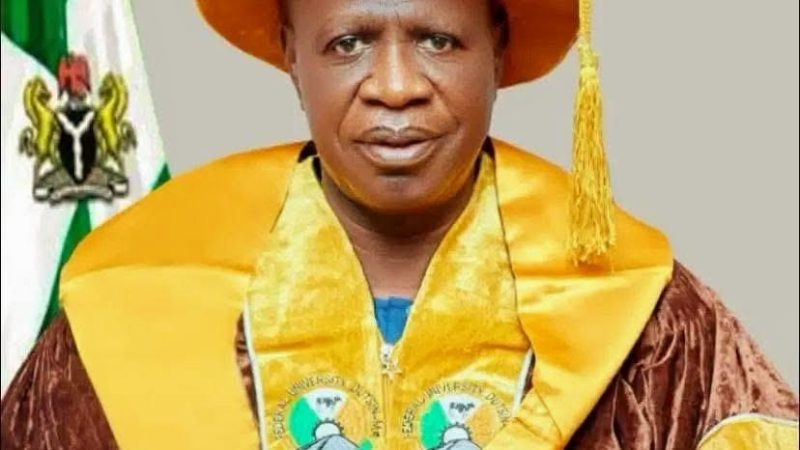
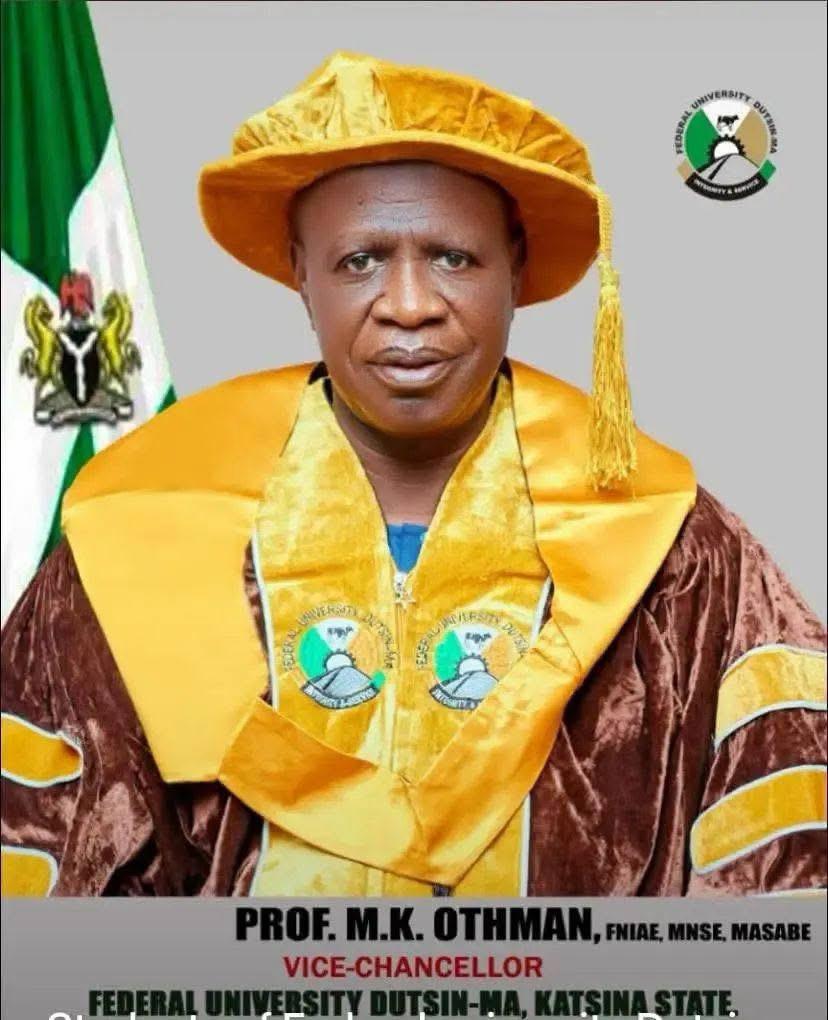
By Prof. M. K. Othman
Today, I share some of your responses to my recent articles. The aim is to invite you to engage with my views — and with the state of the nation — and to add your own perspective to the conversation. The overall goal remains to educate and inform the public, while offering policymakers thoughtful guidance on the issues at hand.
Three subjects are addressed here: the rising profile of Nigerian universities, my odyssey to Saudi Arabia, and a tribute to Arch. Kabir Ibrahim Faskari. Happy reading.
- Nigerian Universities on the Rise Again: Salute to the Federal Government and Academia Prof. M. K. Othman’s Scholarly Optimism on University Reforms in Nigeria: A Merged Reviews
Prof. M. K. Othman, himself a veteran of ASUU and now a university administrator, writes as an insider who has witnessed both decay and recovery. In his words:
“Relative peace is gradually returning to university campuses after a decade of unrest and agitation by ASUU and other unions, thanks to President Ahmed Bola Tinubu’s attentive listening and union leaders’ willingness to resolve contentious issues through give-and-take.”
In another piece on NELFUND, he notes:
“Hitherto, the journey toward higher education in this country has long been a test of endurance and sacrifice… access to university education has more often been determined by financial capacity than by merit.”
A contextual reading of Othman’s optimism is grounded in his belief that the Tinubu administration’s educational reforms are appropriate, and in his prayer that the agreements reached will be implemented faithfully to improve the quality, competitiveness, and global visibility of Nigeria’s tertiary education system.
As a critical stakeholder in tertiary education, Prof. Othman has established a governance template at FUDMA that aligns with the objectives of the new reforms. For instance, as Vice-Chancellor, he insists that FUDMA will strictly adhere to due process and diligence in university governance. He believes that meritocracy must serve as the template for all university engagements. In his words: “When a system is dysfunctional… it produces unprepared professionals.”
Othman strongly believes in capacity building. To demonstrate this commitment, he recently organised a training workshop for more than 200 new lecturers on teaching skills, mentorship, research, and professional ethics. His welfare initiatives are exemplary; the timely promotion of deserving staff and the issuance of promotion letters on the first working day of October are unprecedented in the university’s history. His positive disposition toward implementing CATA, despite irregular funding sources, is commendable.
When a man performs his duties diligently, he deserves commendation. When he strays, he needs constructive criticism to get back on track. Prof. Othman’s admiration for the Tinubu reforms is not only appropriate; it reflects his abiding hope that the Nigerian university system can be made great again.
— Prof. Kenneth Azaigba, Department of History & Strategic Studies, Federal University Dutsin-Ma, Katsina State
Good, thoughtful write-up. The university system in Nigeria needs reawakening. Your suggestions are well-intentioned and aligned with global best practices. The reported ranking is an attempt to document the research output and faculty strength of each university. The reports indicate that some older, mostly first-generation universities have input into the scholar profile. This is quite unfortunate. It behoves each university to ensure that every faculty member enrols in the scholar index. My esteemed regards, Prof.
— Prof. Rabiu Adamu
A very insightful and encouraging piece, Prof. The progress our universities and scholars have made is certainly worth celebrating. More importantly, your article reminds us that this progress must be sustained through consistent funding, sound governance, research support, and a commitment to academic excellence. I look forward to the concluding part.
— Usman Dalha Kankia
Your article on the rise of universities is gratifying, and we hope Nigeria succeeds with good leadership. We also want to remind you that time is running out. Kudos for this hopeful situation.
— Bala Ibrahim Adani
2. My Odyssey to Saudi Arabia
The article about your recent visit to Saudi Arabia is apt, Prof! You have gone beyond the usual writing about infrastructure development, spiritual upliftment, and other things that visitors first notice in the Kingdom of Saudi Arabia. You have rightly captured the yearning for multiple returns that every visitor feels.
You quickly moved past that to go straight to the heart of the matter: the problems being faced by Nigerians out there. It is a brilliant, flowing approach that keeps the reader engaged. The problems our people face there are really frustrating. It is truly sad! The Nigerian authorities need to intervene urgently to address the situation.
The advice and solutions offered, free of charge, will go a long way to help Nigerians and Nigeria.
Congratulations, our able Prof.
— Dr. Hassan Gimba
3. Tribute to Arch. Kabir Ibrahim Faskari (KEBRAM)
I was very close to him, yet I did not know much about this affable man who, as this article reveals, has now departed to be with his Creator. He was so humble that when we needed to discuss an issue, he volunteered to drive to my home. I argued that, since I served as a technical adviser to POFAN, he was our boss and I should visit him instead, but he declined.
We had quality time to discuss the crisis in the All Farmers Association of Nigeria (AFAN), and I suggested many things to which he agreed. His final words were: “If Kabir is no longer around, AFAN will continue.” He further agreed to step down. My response to him, when I narrated Obasanjo’s experience, drew laughter from him.
Our last discussion focused on building historical narratives within AFAN to avoid a future leadership crisis. In his lifetime, he supported AFAN’s current President, Hon. Magaji, who will surely miss his wise counsel.
Ironically, he built his fortune as an architect, yet he is far better known globally as a force to be reckoned with in Nigeria’s agricultural sector. He was a successful farmer, an excellent entrepreneur, an ardent employer of labour, humble, and a gentleman.
His death is sad and a great loss to the country. May his soul rest in peace. Amen.
— Engr. O. Akeju
KEBRAM, as he was widely known in Katsina, was an entrepreneur who, during his lifetime, ventured into businesses ranging from education and health to agriculture. He also engaged youths in skill acquisition programmes. He believed in self-empowerment and in using wealth to develop communities. May Allah Subhanahu Wa Ta’ala forgive his imperfections and grant him Jannah. Amen.
— Dr. Aminu Yakubu