


Northern Security Trust Fund: ₦1bn is a Beginning, Not the Solution III
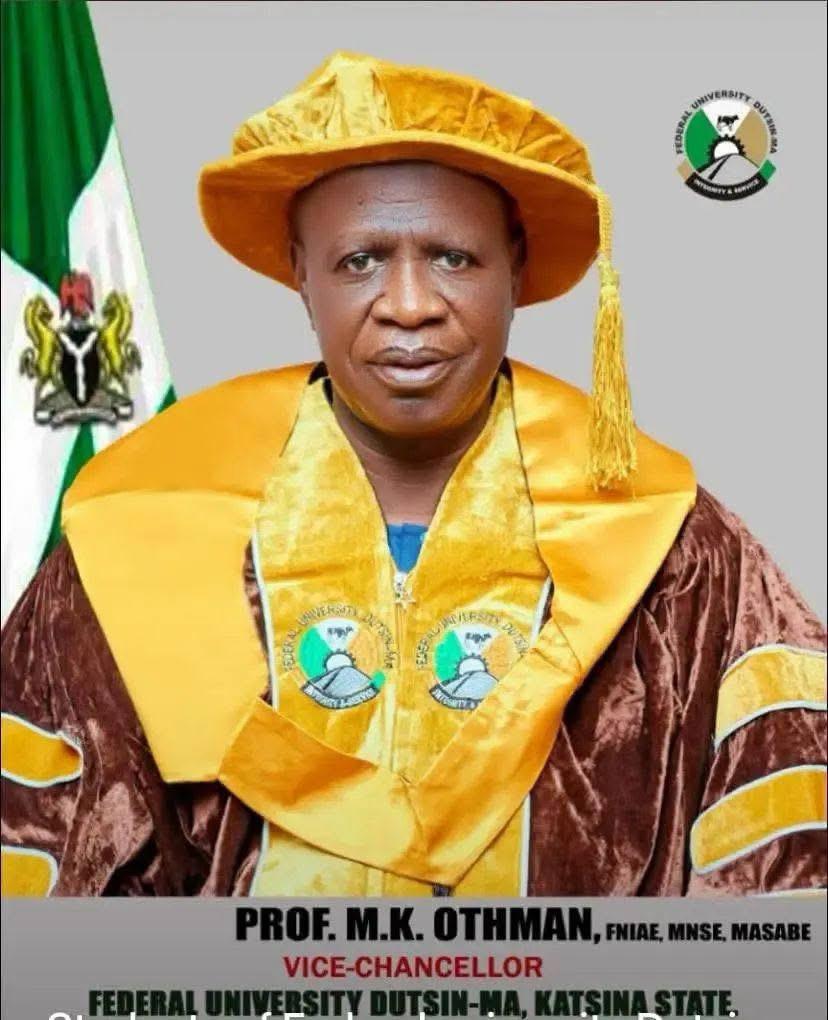
By Prof. M. K. Othman
Northern Nigeria, home to millions of us, is rich in fertile farmland, abundant sunshine, youthful populations, strategic trade routes, and mineral resources. Yet it remains the least developed region, with massive abject poverty and a heavy dependence on Abuja to finance its future. Although this is a general Nigerian problem, its consequences are most visible in the North, where insecurity feeds directly on economic fragility. The central argument of this article is simple: the North cannot achieve lasting progress unless security and development are addressed together.
Ordinary citizens should reasonably expect much from this new Fund. We have all become understandably skeptical after witnessing countless interventions announced with great optimism but implemented with little transparency. This Security Trust Fund cannot afford that fate, and the personalities involved cannot afford to erode the integrity they have built over many decades. If it merely purchases vehicles that later disappear into official convoys or finances activities whose outcomes cannot be independently verified, public confidence will evaporate quickly.
A Trust Fund succeeds not because money exists, but because governance exists. Our governors have constituted a Board of Trustees comprising credible Nigerians whose collective expertise could strengthen oversight and strategic direction. However, institutional credibility ultimately depends less on distinguished names than on transparent systems. The initiative will be judged by whether kidnapping declines, highways become safer, and communities regain confidence in lawful authority.
As discussed last week, the ₦1 billion monthly contribution from the 19 northern state governors is not a complete solution to insecurity, but a step forward. The Fund must analyze the root and immediate causes of insecurity, interrogating whether influential Nigerians and foreign collaborators are nurturing banditry and insurgency, and whether the governors have the political will to confront those facilitating insecurity. The Fund must go beyond funding and address the evil forces sustaining insecurity.
Money is only one part of security; political will is key. Banditry flourishes where government is weak, justice is slow, intelligence is poor, borders are porous, communities are abandoned, and the state lacks a monopoly on force. Military action can temporarily suppress criminals, but unless governance fills the void, new groups will inevitably emerge.
Nigeria has acquired armoured vehicles, surveillance systems, drones, and weapons, yet insecurity persists because technology cannot replace institutions. The best security architecture relies on intelligence, community trust, swift justice, professional policing, accountable leadership, and strong local governance. Equipment supports institutions; it does not replace them. The Fund should be judged by whether it strengthens these foundations.
To build a sustainable Security Trust Fund, we should consider the Lagos State Security Trust Fund model, which has endured for nearly two decades by surpassing government funding. Established in 2007, it created a partnership among government, the private sector, and citizens, with businesses contributing because security is both a public good and an economic necessity. The Fund established governance, reporting, and institutional continuity beyond political transitions. Although the security challenges differ, the principle from Lagos remains valid: broad societal ownership is critical, not reliance solely on government budgets.
The Northern Nigeria Security Trust Fund should become a platform that attracts credible private-sector participation, development partners, philanthropy, and responsible corporations across the region. Industries such as agriculture, mining, manufacturing, transport, telecommunications, and finance face huge losses due to insecurity and would benefit immensely from stability. Their participation will depend on confidence in a transparent, professionally managed Fund driven by clear outcomes.
Transparency may well become the initiative’s greatest test. Nigerians are no longer persuaded by announcements alone; we now demand evidence. The Trust Fund should therefore publish periodic reports detailing funds received, expenditure patterns, procurement processes, supported operations, and measurable outcomes. Independent audits should become routine rather than exceptional. Public accountability should not be viewed as an inconvenience but as a strategic asset that strengthens legitimacy and encourages broader support. A security initiative that seeks public confidence cannot afford financial opacity. Without transparency, the Fund cannot prove that it is solving the insecurity it was created to confront.
Additionally, we must link security policy with economic policy. It is impossible to defeat organized crime when millions of young people lack viable economic opportunities. The region has significant agricultural potential, including large-scale livestock, leather processing, grains, legumes, tomatoes, onions, sesame, gum arabic, and other value chains. However, insecurity has disrupted these sectors that could generate extensive employment. When villages are abandoned, local markets weaken, tax revenues decline, and rural poverty deepens. School closures leave a generation vulnerable to exploitation, and children out of school miss crucial opportunities for development and may become future security risks.
This logic also applies to agriculture: when farmers abandon fertile lands out of fear, especially in the North, it results in lost income and persistent food inflation. Recent years have shown that insecurity in key food-producing areas drives up prices nationwide. Therefore, restoring security in the North is essential not only for regional stability but for Nigeria’s overall economy. It reinforces the same argument: security and development must advance together.
While I believe the Fund has a blueprint of programmes and projects to execute its mandate, there is an urgent need to investigate serious allegations of foreign connivance and the involvement of unpatriotic Nigerians in banditry and insurgency. The Fund should therefore examine whether areas experiencing banditry and terrorist attacks overlap with the nation’s richest newly discovered mineral deposits, such as gold, lithium, and uranium.
The violence appears to target specific areas, forcing locals to leave their geologically verified, mineral-rich lands. While ordinary Nigerians grieve the loss of life, a shadow network of billionaires, proxy politicians, and foreign mineral extraction companies moves into abandoned land to mine solid minerals worth billions of dollars. Terrorism has become part of a land-clearing operation for mineral mining. The actors behind the terrorism exploit an administrative loophole in the Nigerian Minerals and Mining Act of 2007.
By law, the Federal Government owns all minerals beneath the earth and issues exclusive prospecting licences and mining leases to private companies. Prospective licence holders must obtain consent from the local community living on the land before a solid minerals licence is issued. But what happens if the community is gone or its houses have been burnt down? The Fund should thoroughly examine whether this loophole could make violent crime part of a resource-control agenda. This is a serious allegation, and if true, it would show why insecurity cannot be separated from resource control and governance.
Another consideration is the role of traditional rulers. Their responsibilities extend beyond ceremonial functions; they serve as custodians of local legitimacy and possess knowledge of community dynamics unavailable to formal institutions. Their involvement in intelligence gathering, conflict mediation, and community mobilization should be strengthened, while recognizing that they cannot substitute for professional security agencies. Likewise, religious leaders must continue to promote narratives that reject violence, strengthen social cohesion, and discourage the misuse of religion for criminal or extremist purposes. Northern Nigeria’s history has been shaped by rich Islamic scholarship, Christian missionary education, indigenous systems of conflict resolution, and centuries of commercial interaction. These traditions should become resources for peace rather than casualties of insecurity.
Security reform is not a project with a fixed completion date, but a continuous process requiring disciplined leadership, institutional learning, and sustained investment. Governors will change and administrations will come and go; hence, the Trust Fund must be designed to outlive political tenures and remain focused on measurable public outcomes rather than political visibility. History rarely remembers governments for the size of their announcements, but for the problems they solved. The Northern Governors’ Forum has taken a significant step by acknowledging that the region must assume greater responsibility for its own security. That decision deserves support. But it also carries a heavier obligation: the governors have raised public expectations; they must now demonstrate that collective action can achieve what isolated efforts could not.
Like millions of Northerners, I hope this initiative succeeds. Our region has buried too many of its people, abandoned farms, closed schools, and destroyed dreams. The North needs an intervention that lasts beyond political cycles, strengthens institutions, and restores public trust. If the governors follow this start with commitment, discipline, and results, the Trust Fund could become one of the most significant regional security efforts in Nigerian history. Without that, it will only show that even good ideas fail without lasting political will.
Again, the true measure of this initiative will not be the ₦1 billion contributed every month, but whether a farmer in Batsari, a trader travelling between Birnin Gwari and Kaduna, a student returning to school in Dutsin-Ma or Zurmi, a family displaced from Bama, or a transporter driving through the forests of Niger State begins to experience a different reality. It will be reflected in reopened classrooms, revived farms, safer highways, expanding businesses, and communities where children once again play without fear. When security restores dignity, stimulates production, and renews hope, the investment will have yielded its greatest dividend.
The governors have opened an important chapter, and I am deeply impressed. Whether it becomes a turning point in the history of the North or another missed opportunity will depend not on the amount committed but on the discipline to build stronger institutions, the courage to make difficult reforms, and the determination to sustain them long after the applause has faded. If that resolve endures, the message to bandits, terrorists, and every merchant of violence and dreadful evil will be unmistakable: the space for lawlessness is shrinking, and the era of impunity is drawing to a close. Surrender before your neutralization, after which you will meet your end as a permanent resident in hellfire. May Allah bring peace and harmony to Nigeria. Amen.