
From 20 Girls to Generations of Leaders: How Queen’s College, Lagos Began
By Prince Tunde Aiyekooto
Today, Queen’s College, Lagos stands as one of Nigeria’s most distinguished secondary schools for girls.
Yet when it opened its doors in 1927, it began with only 20 students, eight part-time teachers, and an entirely different name.
It was then known as the Government Secondary School for Girls.
A School Born from Advocacy
On October 10, 1927, the school officially opened in Lagos, at a time when Nigeria was still under British colonial rule.
Its establishment did not happen by chance.
The colonial government had already founded King’s College, Lagos, for boys in 1909. Girls, however, had no comparable access to government secondary education.
Some educated Nigerian women considered this injustice unacceptable.
Organised under the New Era Ladies Club, they began to press the colonial administration to establish a secondary school for girls. They did not merely protest; they organised, raised funds, and presented a compelling case to the government.
Among the leading figures in the movement was Lady Oyinkan Abayomi. Lady Hugh Clifford, wife of the colonial Governor, served as the club’s chief patron.
Their persistence eventually paid off.
The First Day
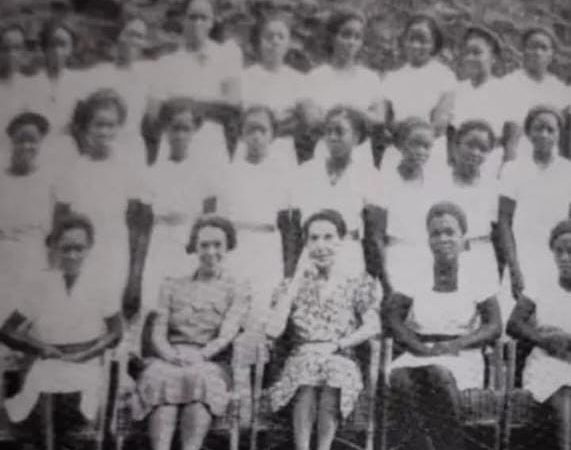
On that historic October morning, the Government Secondary School for Girls was born.
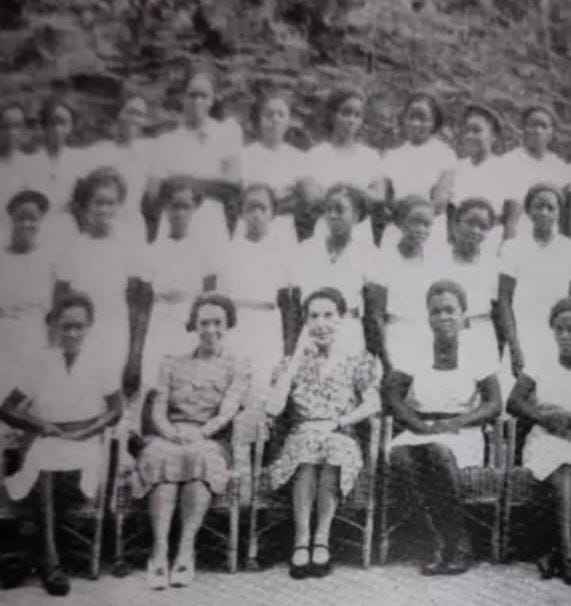
It began with 20 students: 13 admitted into Form One and seven into Form Two.
Its first principal was Miss Faith Wordsworth, later known as Mrs Tolfree. She worked alongside eight part-time teachers, one of whom was Lady Oyinkan Abayomi, the only Nigerian member of the original teaching staff.
Among the pioneer students were Ebunola Ajagbe, who became the school’s first Head Girl, Florence Williams, and Oluyemi Alakija.
A Nursery of Trailblazers
Queen’s College did not merely make history when it opened. Over the decades, it became synonymous with women who distinguished themselves across diverse fields.
Its notable alumnae include:
- Professor Grace Alele-Williams
In 1985, she became the first Nigerian woman appointed Vice-Chancellor of a university, the University of Benin. She was also Nigeria’s first woman to earn a doctorate in mathematics. - Dr Elizabeth Abimbola Awoliyi
Nigeria’s first female medical doctor to practise in the country. She graduated in medicine from Trinity College Dublin in 1938 and became a pioneer in women’s healthcare. - Professor Adetoun Ogunsheye
Nigeria’s first female professor, a pioneering academic and librarian who made significant contributions to education and library development. - Justice Modupe Omo-Eboh
Recognised as Nigeria’s first female judge, she broke a major barrier for women in the Nigerian judiciary. - Professor Folasade Ogunsola
A medical microbiologist and former Vice-Chancellor of the University of Lagos, she made history as the first woman to hold that position. - Winifred Oyo-Ita
In 2015, she became Nigeria’s Head of the Civil Service of the Federation, one of the most senior positions in the country’s public service.
A New Name, A New Home
The school did not retain its original name for long.
On April 12, 1928, through an official government notice, it was renamed Queen’s College, Lagos.
For its first three decades, the school operated around Force Road, near the old Race Course in Lagos. In 1958, it moved to its present location at Onike, Yaba.
From those humble beginnings of 20 students, Queen’s College grew into an institution that would educate generations of Nigerian women.
More Than a School
The story of Queen’s College is not merely the story of a school. It is the story of women who refused to accept that girls deserved less.
From just 20 students in 1927 to generations of accomplished Nigerian women, Queen’s College has written a remarkable chapter in the history of education in Nigeria.
What began with only 20 girls would go on to become one of the most recognised names in Nigerian girls’ education.