

Nigerian Universities on the Rise Again: Salute to the FGN and Academia III
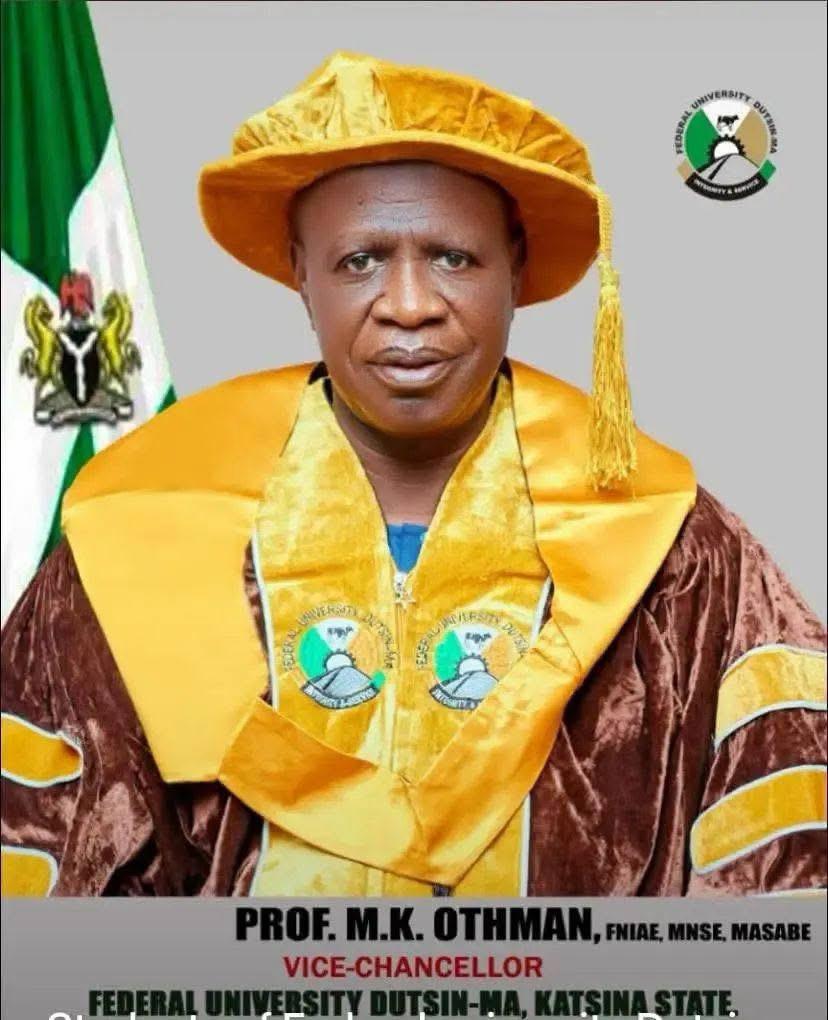
By Prof. M.K. Othman
Last week, the closing sentence of this series posed a critical question: What role has academia played in the global ranking of our universities?
Academia comprises intellectuals engaged in teaching, research, and community service, as well as support staff, technologists, and administrators — all key stakeholders whose livelihoods are intertwined with the university system. Despite numerous challenges, including low wages, inadequate facilities, and dilapidated infrastructure, their struggles and sacrifices have built an enduring and resilient university system for Nigeria.
Members of the Academic Staff Union of Universities (ASUU) constitute the bulk of academia, and their agitation for a better university system was demonstrated through frequent industrial actions — the “infamous” ASUU strikes. The celebrated TETFund interventions across tertiary institutions today are the fruit of those struggles.
Today, industrial action in our universities is becoming a thing of the past, thanks to the responsive and responsible leadership of the Minister of Education, Dr. Tunji Alausa, who is actively supported by President Bola Ahmed Tinubu. The Tinubu administration has done much in this regard. We vividly remember that four years ago, our universities still bore the scars of the eight-month ASUU strike of 2022. Lost semesters could not simply be restored by compressing academic calendars: experiments were interrupted, postgraduate research stalled, partnerships were weakened, and students lost confidence in the system.
The administration released four months of salaries withheld from ASUU members following the 2022 strike, addressed the withheld salaries of SSANU and NASU, and reconstituted negotiations under the leadership of a seasoned technocrat, Alhaji Yayale Ahmed, to renegotiate the long-running 2009 FGN-ASUU Agreement. The achievement of Yayale’s team eased tensions and demonstrated that dialogue remains the best approach to resolving industrial disharmony, as it has so far prevented a return to the prolonged nationwide paralysis of 2022. We are pleased that peace and stability have returned to our campuses.
For us, such stability is itself a critical component of academic infrastructure. Doctoral programmes, international research consortia, and multi-year grants require confidence that laboratories will remain open and that academic calendars will run unhindered. Government and the unions should therefore move beyond the cycle of ultimatums, strikes, and emergency negotiations toward a state where agreements are costed, implementation timelines are explicit, and disputes are addressed before they escalate into national shutdowns.
Under Dr. Alausa, quality assurance has become the watchword at the Federal Ministry of Education; public policy discourse has increasingly emphasized standards, accountability, and governance. One cannot but admire his outrage at low educational standards. He has galvanized the National Universities Commission (NUC) to retain its central accreditation and regulatory responsibilities. This matters because the country does not improve merely by licensing more universities or enrolling more students. Increasing the number of universities without adequate staffing, laboratories, libraries, postgraduate supervision, and credible accreditation can dilute the very quality that rankings are beginning to recognize. Due diligence must apply equally to public and private universities, and accreditation should be an instrument for improvement rather than a mere periodic compliance exercise.
Nigerian universities are rising again. Rankings are earned within universities — by academics producing research, graduate students completing rigorous work, librarians expanding access to knowledge, technologists maintaining equipment, and administrators improving institutional systems. Several federal, state, and private universities have also benefited from leadership teams and governing councils that understand the competition for talent, grants, partnerships, citations, and reputation. This makes autonomy practical rather than abstract. Universities need room to make academic decisions, recruit talent, and manage resources within their legal and financial constraints. Political interference can undermine merit and consume management attention. Yet autonomy cannot mean insulation from audit, procurement rules, or performance scrutiny. The workable balance is responsible autonomy, in which sufficient freedom to pursue academic goals is matched by transparent governance and measurable results.
Notwithstanding the foregoing, there is still ample reason for caution: no Nigerian university is close to the global top 100. Many laboratories remain inadequately equipped; electricity and connectivity consume resources that should support teaching and research; academic remuneration has been eroded by inflation; brain drain remains serious; and research funding is modest compared with leading systems in Africa, Asia, Europe, and North America. This does not mean our universities should chase ranking indicators at the expense of their public mission; a university can improve its visibility and still fail its society. The more important test is whether its scientists address disease and food insecurity, its engineers solve industrial and infrastructure problems, its social scientists illuminate public policy, its humanities deepen understanding of society, and its graduates can think, create, and work competitively on a global scale.
The lesson from 2020–2025 is neither that Nigerian higher education has been transformed nor that government intervention is irrelevant. Progress becomes possible when institutional effort meets a supportive policy environment. Although the gains began before the current administration, they have been strengthened and accelerated; ultimately, they belong as much to universities, academics, and earlier investments as to current policy. The administration of President Bola Ahmed Tinubu also bears responsibility for deepening these gains.
The policy task should now become more exacting. Nigeria needs a medium- to long-term higher-education compact that endures beyond annual budgets and ministerial changes. The government should establish predictable multi-year research financing; tie a greater share of intervention funding to measurable academic and societal outcomes; create a national framework for maintaining expensive research equipment; strengthen competitive grants and doctoral training; publish transparent performance data for NELFUND and TETFund; and institutionalize a binding mechanism for implementing and reviewing agreements with university unions. Governing Councils should be selected for competence and integrity and then allowed to govern, while the NUC should have the professional independence and resources to enforce standards without fear or favour.
This becomes especially important as Nigeria approaches the 2027 general elections. Higher education should not be reduced to campaign promises to open additional universities or announce larger appropriations. Political actors can legitimately differ on how the sector should be financed and governed, but the country needs continuity in policies that demonstrably work. Research programmes, doctoral training, international collaborations, and institutional reputation mature over periods longer than a single electoral cycle. What works should be preserved; what fails should be corrected based on evidence rather than discarded for political symbolism.
For decades, we have watched outstanding Nigerian scholars build distinguished careers abroad and then celebrated their achievements from home. The better ambition is to make Nigerian universities places where such scholars can remain, return, or collaborate without compromising their professional standards. Global rankings can offer useful external evidence of progress, but they are not the destination. The real measure is whether universities can consistently produce consequential knowledge, retain first-rate talent, graduate capable students on schedule, and apply scholarship to Nigeria’s development challenges.
That is why the next phase cannot be another season of applause. Before and after 2027, the Federal Government, states, university councils, management, and unions should commit to a small set of durable obligations, including predictable research funding, protection of academic calendars, enforcement of standards, rewarding performance, defending responsible autonomy, and rigorous accountability for public resources. If these commitments become institutional rather than political, Nigeria will not need to chase rankings as a national public-relations exercise. Stronger rankings will increasingly follow stronger universities — and stronger universities, not the tables on which they appear, are the policy outcome that matters.
Still, I doff my cap to the FGN and academia in Nigeria for stabilizing the university system, and I pray for more glorious days ahead. Amen.