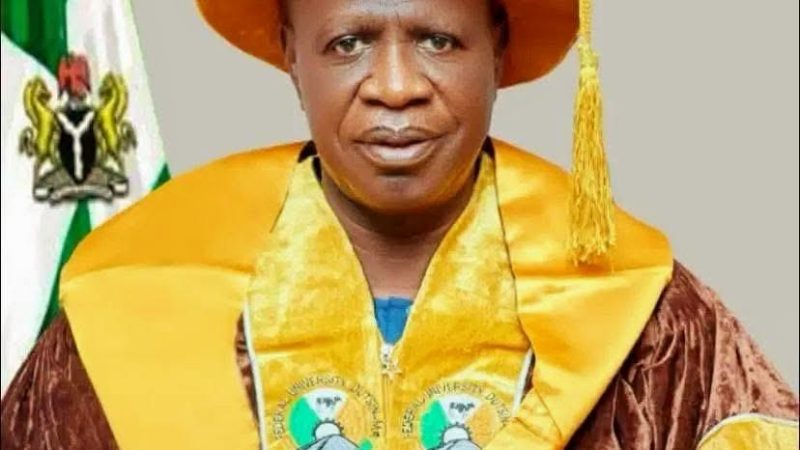





Beyond Age and Geography: Why Benjamin Sati’s Emergence Has Opened a Bigger Conversation About Gombe’s 2027 Political Leadership.
By Cliff Stanley.
The growing visibility of Barrister Benjamin Sati, Esq., in conversations surrounding the 2027 deputy governorship contest in Gombe State deserves to be examined beyond the immediate excitement of political posters and social-media endorsements.
His name has increasingly appeared in public discussions about who could potentially complement the Peoples Democratic Party (PDP) governorship ticket as deputy governor. A recent PUNCH analysis of the 2027 Gombe contest specifically identified Sati among personalities being promoted as a possible candidate capable of strengthening the PDP ticket. The report described him as a respected legal practitioner, former chairman of the Nigerian Bar Association, Gombe Branch, and a member of the legal team involved in the legal challenge surrounding the PDP governorship candidacy.
That development raises a larger question which Gombe’s political class cannot afford to avoid:
What kind of leadership does a young, changing and increasingly sophisticated Gombe require in 2027?
The bigger question is about Benjamin Sati being capable and a loyal party man . He has the criteria by which the next generation of political leadership should be selected. succession should never be reduced to age, ethnicity, senatorial district, religious identity or political loyalty. Competence, character, administrative capacity, constitutional understanding, political legitimacy and the ability to build bridges across communities should matter.
On those criteria, Sati’s public record provides material for serious consideration.
His professional background is particularly relevant. He is a lawyer and has occupied leadership positions within the Nigerian Bar Association in Gombe. During his tenure as NBA Gombe chairman, he publicly raised concerns about the condition of the state’s judicial system, including the continued reliance on outdated laws inherited from the former Bauchi administrative structure and weaknesses in judicial funding. PUNCH reported those concerns in 2025.
This is important because the office of deputy governor is frequently misunderstood in Nigerian political discourse.
A deputy governor is not merely a political ornament attached to the governor’s ticket. Under the Constitution, the deputy governor is part of the executive structure of the state and may be required to assume significant constitutional and administrative responsibilities.
Consequently, the ideal deputy governor should possess more than electoral popularity. The office requires discretion, institutional understanding, constitutional literacy, political maturity and the capacity to work within a complex executive environment.
Sati’s legal background therefore provides an important dimension to the conversation.
The appearance of posters, jingles, debates promoting Sati should by itself, be interpreted as scientific evidence that he enjoys majority acceptance across Gombe State.
Political posters demonstrate mobilisation, advocacy and growing visibility, the jingles show he is being loved and cherish, the debates is that he has increasing popularity in the race. They have nearly constitute an opinion poll in the state .
Nevertheless, the phenomenon is politically significant.
When a political personality begins to attract spontaneous or organised support beyond the conventional structures of party politics, political parties should pay attention. It may indicate that a section of the electorate is searching for alternatives to established political patterns.
That distinction matters.
The responsible question is not simply, “How many jingles, posters are appearing?”
It is:
What is driving the demand behind them?
Is it competence?
Is it generational renewal?
Is it geographical balancing?
Is it dissatisfaction with established political elites?
Is it the search for a politically independent and professionally grounded deputy governor?
Or is it simply another phase of early political mobilisation?
Those questions require evidence rather than enthusiasm.
Gombe’s Generational Question
There is, however, a legitimate structural issue that deserves serious attention: generational representation in political leadership.
Nigeria is an overwhelmingly youthful country.
The National Bureau of Statistics’ National Baseline Youth Survey estimated 64.1 million Nigerians aged 15–35, while 52.2 million fell within the 18–35 bracket used in the study.
Gombe cannot be isolated from that demographic reality.
A state whose population contains a substantial proportion of young people cannot indefinitely treat youth representation as merely a campaign slogan.
The challenge is not that older politicians should be excluded from public service. That would be neither democratic nor intellectually defensible. Experience remains valuable.
The more important issue is whether political parties are deliberately creating a pipeline through which competent younger professionals can enter executive leadership.
There is a difference between respecting experience and institutionalising political succession.
A healthy democracy requires both.
Generational renewal should not mean replacing experience with youth for the sake of youth.
Rather, it should mean expanding the leadership pool to include people whose professional experiences correspond with the complexity of contemporary governance.
Today’s Gombe requires expertise in:
digital transformation;
education and human capital development;
employment and entrepreneurship;
agricultural modernisation;
public finance;
healthcare;
institutional reform;
peacebuilding and social cohesion;
environmental sustainability;
technology and innovation; and
accountable public administration.
This is why the conversation surrounding Sati deserves to be examined seriously.
A legal practitioner who has participated in institutional advocacy and public-interest debates brings a different professional perspective into executive politics.
For example, in 2024 the Gombe NBA under Sati publicly raised concerns about judicial welfare and the condition of the state’s justice system.
The same period also saw the Gombe NBA challenge aspects of the state’s land-revocation policy, arguing for greater adherence to constitutional and statutory protections.
Whether one agrees with every position taken by the association is a separate matter.
What is significant is that such experiences expose a prospective political leader to questions of law, institutions, public accountability and the relationship between government and citizens.
Those are not insignificant qualifications for an executive office.
Nigerian politics has often treated deputy-governorship positions as instruments of political arithmetic.
Candidates are sometimes selected primarily because they satisfy a geographical formula or represent a particular political constituency.
Geographical balance matters in a plural society.
But it should not become a substitute for competence.
The most useful deputy governor is not necessarily the person who merely completes a mathematical 6 equation on a political spreadsheet.
The stronger model is someone who can add institutional capacity to the administration.
This is particularly important because the deputy governor can become a critical bridge between the governor, legislature, local governments, professional groups, civil society, traditional institutions and communities.
A successful deputy governor therefore requires three forms of legitimacy:
electoral legitimacy, professional legitimacy and social legitimacy.
The political party must determine whether any prospective candidate possesses all three.
For the PDP, the choice of running mate should therefore be approached as a strategic governance decision rather than merely a ticket-balancing exercise.
The party should ask:
Who can strengthen the governorship candidate?
Who can appeal across political, ethnic and generational boundaries without deepening existing divisions?
Who has demonstrated competence outside the traditional political machinery?
Who understands institutions rather than merely political slogans?
Who can speak credibly to young people without reducing youth politics to social-media rhetoric?
Who can work with civil servants, technocrats, traditional institutions, legislators, religious communities and civil society?
Who can become governor tomorrow if constitutional circumstances require it?
These are more consequential questions than simply asking who is popular within a particular political caucus.
A Warning Against Personality Politics
There is also a danger in turning any emerging political figure into a political messiah.
Benjamin Sati should not be exempted from scrutiny simply because his name is gaining visibility.
If his candidacy becomes a serious proposition, the public should interrogate his record.
What is his economic vision for Gombe?
What is his position on education?
How does he understand youth unemployment?
What would he contribute to healthcare reform?
What is his approach to agricultural productivity?
How does he understand local-government autonomy and development?
What institutional reforms would he support?
How would he strengthen accountability?
How would he approach inter-community relations and peacebuilding?
What is his vision for Gombe beyond 2027?
These questions are not attacks.
They are the legitimate requirements of democratic accountability.
Politics Must Move From “Who Is Our Turn?” to “Who Can Deliver?”
One of the weaknesses of Nigerian politics is the tendency to reduce political selection to the politics of entitlement.
“This is our turn.”
“This is our zone.”
“This is our tribe.”
“This is our age group.”
“This is our party.”
But democratic governance ultimately asks a different question:
Can this person govern?
Gombe should be mature enough to move beyond politics as rotational entitlement towards politics as a competition of competence, integrity, inclusion and development ideas.
This does not invalidate zoning or political balancing. It places them within a broader democratic framework.
The objective should be representation with competence, not representation instead of competence.
A Test for Gombe’s Political Parties
The emerging conversation around Benjamin Sati should therefore become a test for every political party in Gombe State not just the PDP.
If political parties genuinely believe that young people are the future, they must demonstrate it through candidate selection.
If they believe in technocratic governance, they must open their structures to professionals.
If they believe in inclusive politics, they must create room for women, young professionals and people from outside traditional political networks.
And if they believe in competence, they must allow competence to compete.
The question should not be whether a candidate belongs to the old or new generation.
The question should be whether that candidate possesses the capacity to govern a changing Gombe.
The significance of Benjamin Sati may ultimately extend beyond whether he becomes deputy governor.
His emergence has already contributed to a conversation about what Gombe’s next generation of leadership should look like.
That conversation is valuable.
The PUNCH analysis of the 2027 contest has already placed Sati among the personalities being discussed in relation to the deputy-governorship question. His recent appearance in high-profile litigation concerning the PDP governorship candidacy also demonstrates that he remains active within the party’s legal and political environment.
But ultimately, political visibility must be converted into demonstrable public value.
A poster can introduce a politician.
A professional record can establish credibility.
A manifesto can establish vision.
But only governance can establish legacy.
The Choice Before Gombe
Gombe’s 2027 political conversation should therefore not be reduced to personalities.
It should become a conversation about the kind of state citizens want to build.
Do Gombe’s political parties want continuity without sufficient renewal?
Do they want youth participation merely at rallies and on social media?
Or are they prepared to give competent younger Nigerians genuine responsibility?
Do they want technocrats to remain advisers while political offices continue to be dominated by conventional political networks?
Or can professional competence become a genuine pathway into executive leadership?
These are the questions that deserve answers.
Benjamin Sati’s growing political visibility provides an opportunity to ask them.
Whether he eventually emerges as a deputy-governorship candidate is ultimately a matter for the appropriate political and party processes. But the broader issue should survive whichever candidate receives the nomination:
Gombe must begin to judge political leadership not merely by age, geography, loyalty or political inheritance, but by competence, character, capacity and the ability to convert public trust into measurable development.
That is the real generational question.
And perhaps that is the most important debate Gombe can have before 2027.
Cliff Stanley
Political Scientist, Analyst, Public Theologian, Cliffstanley3@gmail.com 07032826319